Bot Farm or Creator Network? 7 Questions to Ask
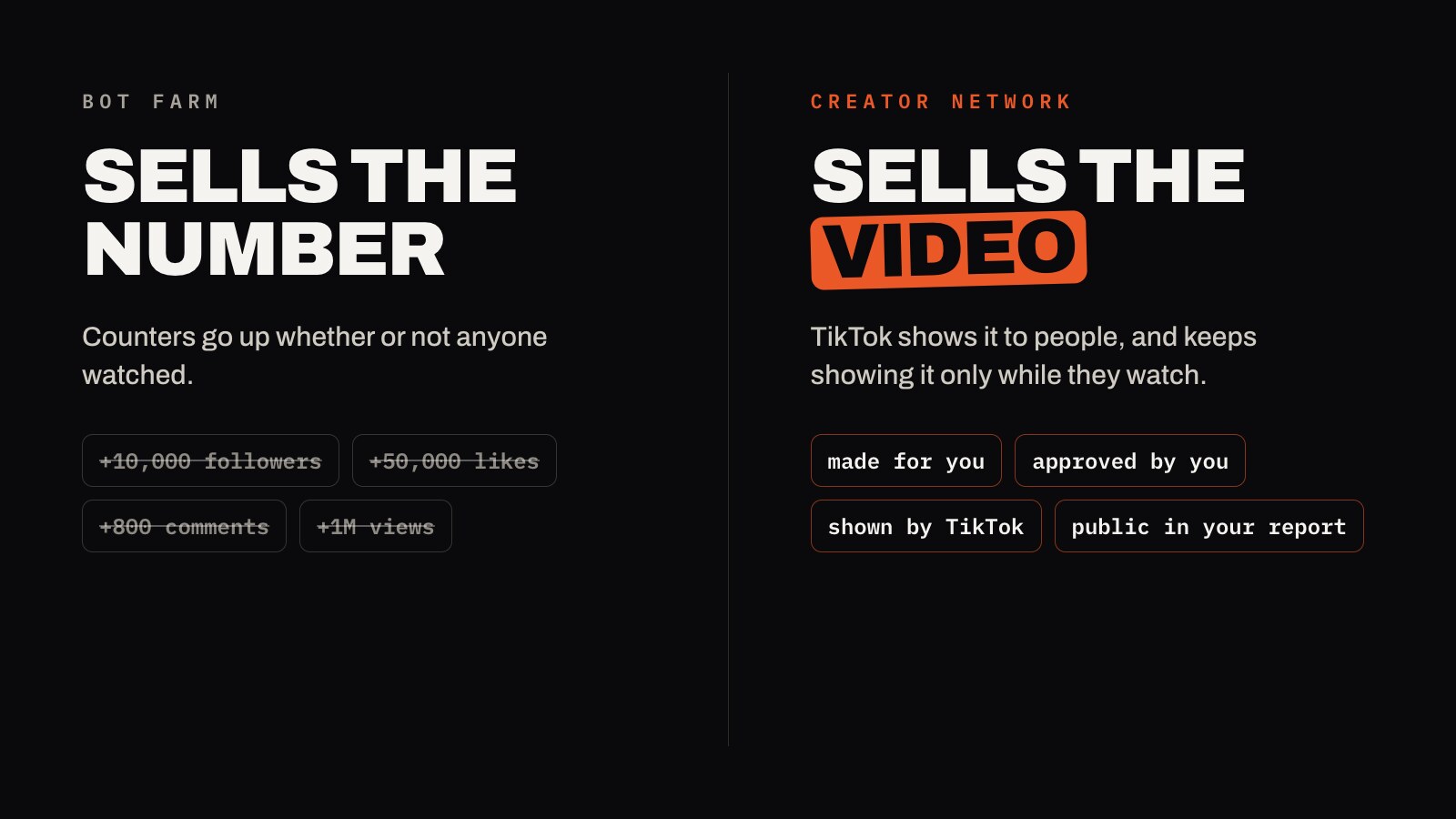
A bot farm is a service that fakes the signals of popularity. It sells followers, likes, views and comments made by automated or hijacked accounts, not by interested people. When it runs on racks of real smartphones, it is also called a phone farm. An AI creator network also runs many accounts, but it sells videos: the brand approves them, they post, and the platform shows them to people like any other post.
The two can look alike from the outside, since both run thousands of accounts and both use AI. Manyloud runs an AI creator network with 10,000+ TikTok channels and 1,000+ AI creators, so we care about what separates them. This guide explains the difference and gives seven questions to ask any vendor before you sign.
What is a bot farm?
A bot farm is a set of accounts used to make something look more popular than it is. Some run on servers, others on hundreds of real phones in racks. What a bot farm sells is the count itself: followers for a profile, likes and views for a post, a wave of comments under a video. Nobody has to watch anything for the count to go up. The buyer gets a number and nothing else.
What is fake engagement?
Fake engagement is any like, follow, comment or view that no interested person chose to give. It comes from bot accounts, hijacked accounts, click farms, or comments posted in bulk to make a video look popular. Comment seeding belongs here too: comments written by a vendor and posted from its own accounts under a brand's videos, or under a competitor's.
Is buying fake followers illegal?
In the US, an FTC rule now bans it. The rule on reviews and testimonials was announced by the FTC in August 2024 and took effect on October 21, 2024. It bans buying or selling fake indicators of social media influence, such as followers or views generated by bots or hijacked accounts. It applies when the buyer knew or should have known they were fake and used them to look more influential for business.
What is an AI creator network?
An AI creator network is a set of TikTok accounts run by AI creators, each a photoreal person with a face, a voice and a topic, posting short videos for a brand. It sells videos, and the videos earn their views the ordinary way. TikTok recommends videos by what each viewer is interested in, and says that follower count is not a direct factor. How people respond to a video decides how far it goes.
So a network that only posts videos has no way to inflate the numbers on a video nobody wants to watch. Its views come from people TikTok chose to show the video to. That makes it a form of advertising: the brand pays for content that gets shown to people, and the campaign is judged by how many of them watch.
Is an AI creator network just a bot farm?
No, but a viewer cannot tell them apart in the feed. Both run many accounts from one company's systems, and nobody can see who manages an account by looking at it. The difference is in what goes through the accounts and in the contract behind them. Is anything faked around the videos? Who approves the words? Who can check the numbers? Who carries the risk when something goes wrong? A buyer can ask about each of these before signing.
How do you tell a bot farm from a real UGC agency?
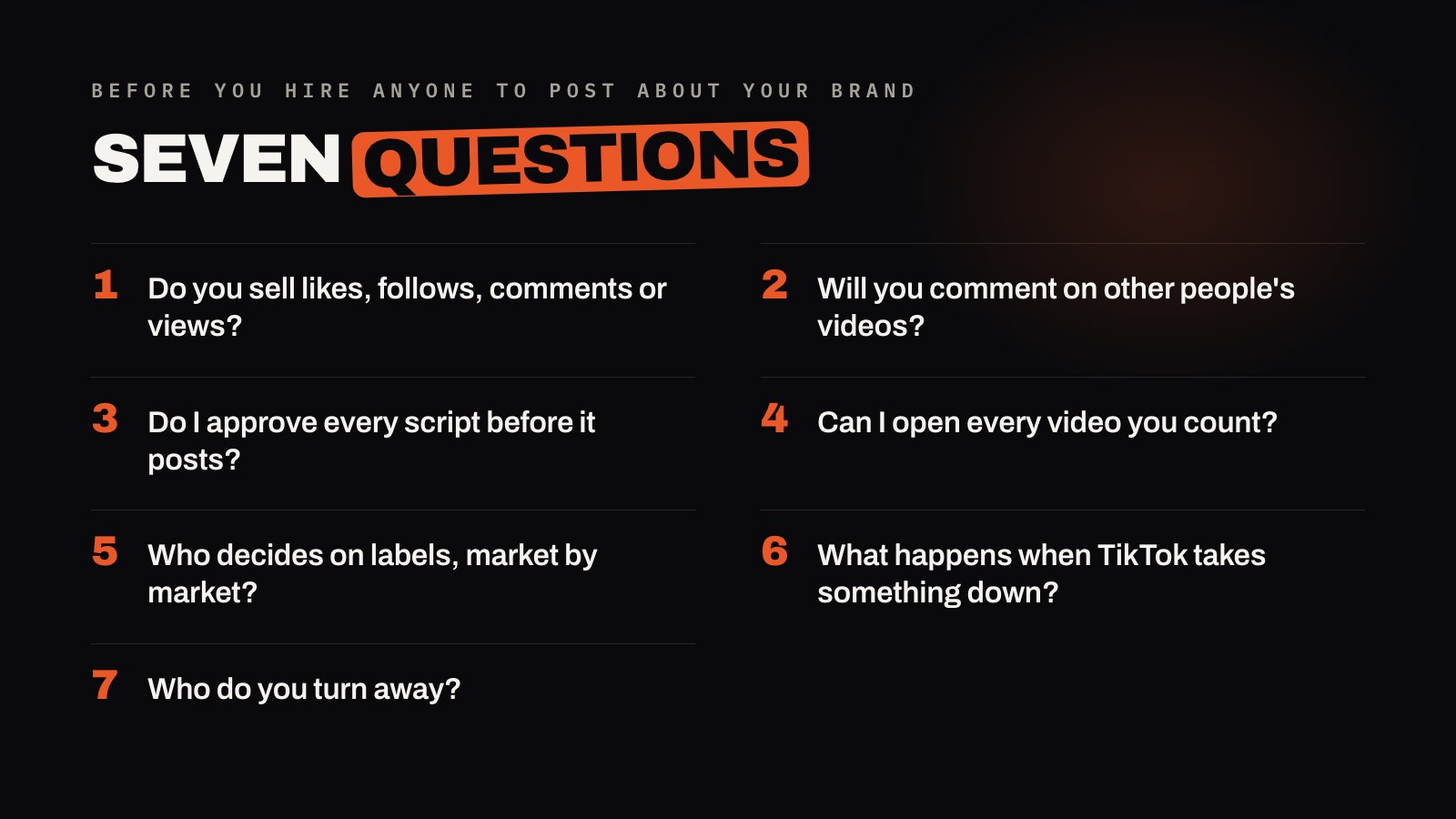
Ask any vendor these seven questions before you sign, then check that the contract says the same thing.
- Do you sell likes, follows, comments or views? A network posts videos and does not touch the counters. A yes means a bot farm, and in the US it puts the buyer on the wrong side of the FTC rule.
- Will you comment on other people's videos, including competitors'? Comment seeding is fake engagement, and some vendors sell it in bulk.
- Do I approve every script before it posts? If a vendor posts without your sign-off, you answer for words you never saw.
- Can I open every video you count? Every video should be public and linked in your report, so you can check each counter yourself.
- Who decides on labels? AI labels, #ad tags and risk warnings should be your call, set market by market, and anything local rules require should always go on.
- What happens when TikTok takes something down? Nobody can promise that it never happens. A good answer has a time and a cost: you hear about it within a day, and the vendor fixes it at its own expense.
- Who do you turn away? A network that takes any client may carry political campaigns, and your brand would post alongside them. A short list of refusals is a good sign.
How does Manyloud answer the seven questions?
Manyloud does not sell likes, follows, comments or views, and does not comment on anyone's videos. Clients approve every script and every original video before anything posts, and every edit is made from an approved original. Every video is public and linked in the client's report. Labels are the client's call in each market, and whatever a market's rules require always goes on. If TikTok takes down a video or an account, the client hears from us within 24 hours, and we remake the video or replace the account at our cost. We turn away political campaigns and governments, whatever the budget.
More answers are in the FAQ on our homepage, and prices are on the pricing page. Or tell us what you are launching, and we will go through the seven questions on a call, for your product.
The pricing is public, the first campaign starts at $15,000, and scripts take hours.