Why AI UGC Is More Authentic Than Influencers
How can a person who does not exist feel more authentic than a real one? It sounds like a paradox, but only until you look at what "authentic" means inside a feed. Authenticity there was never about the biography of the person on screen. It is a property of the video itself: does it behave like something worth watching.
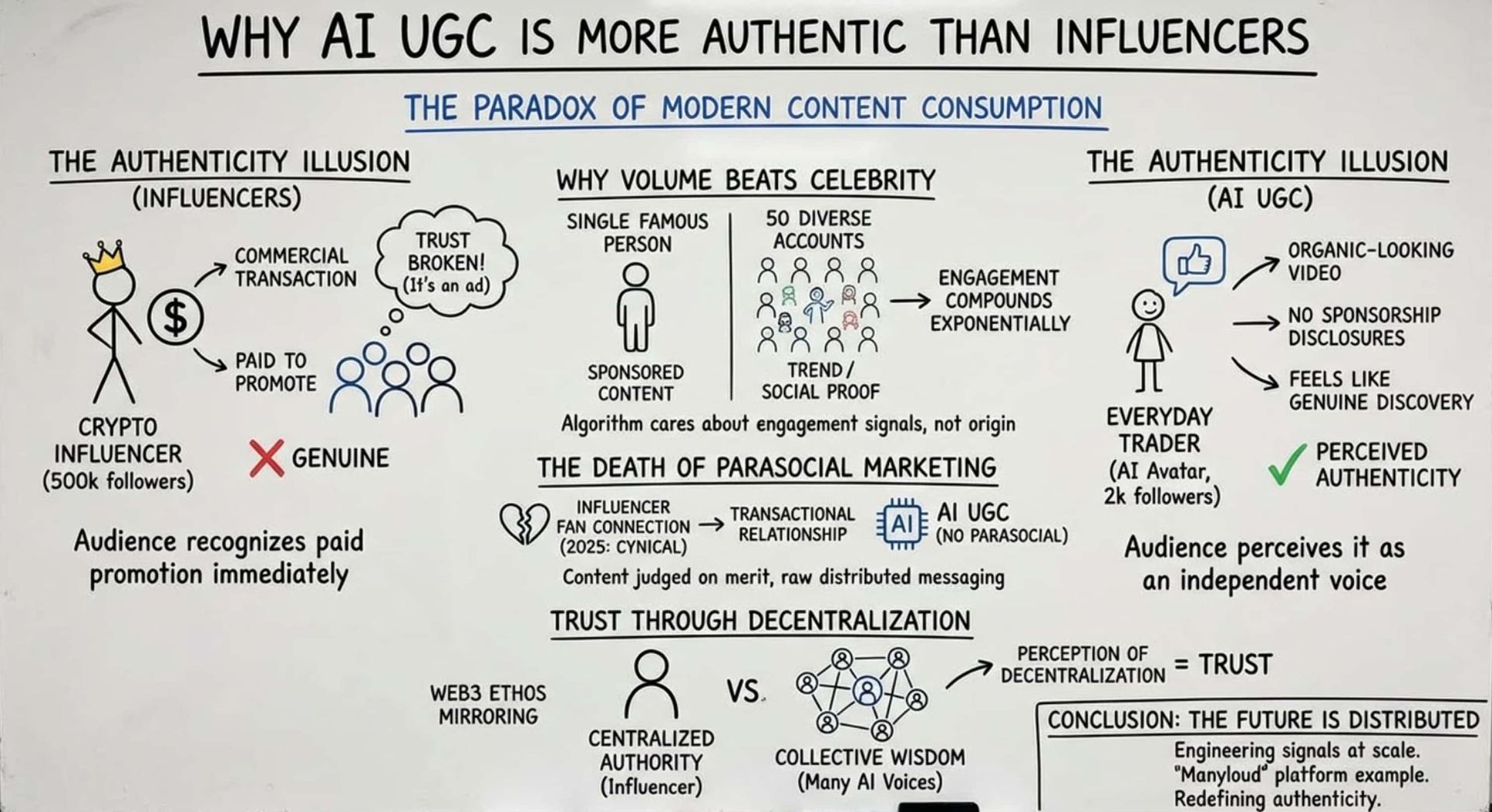

Why influencer posts stopped converting
When an account with half a million followers posts about a product, the audience prices in the payment instantly. They have seen the pattern hundreds of times. The video can be sincere, well made, even true, and it still lands as an ad, because the frame says ad before the content says anything.
Years of sponsored posts wore out the one-sided sense of friendship those accounts sell. The audience no longer believes the connection is personal, and marketing that leans on that belief pays full price for trust it no longer gets.
Authentic means native to the feed
TikTok's own research with PA Consulting found that 76% of users say real people in finance content make a brand feel relatable. The platform that sells polished ads published that, which is what makes it worth quoting.
A person talking to a camera about something they use is the format people open the app to watch. That is the working definition of authenticity in 2026: not a credential, a format. The video looks and moves like the feed, so people watch it instead of scrolling past it.
AI creators are built for exactly that format. The face and voice are made, the script is written, and the result watches like the thing people came for, because it is shaped like it.
Why fifty voices beat one famous voice
There is a second layer, and it matters more than the format.
One famous person promoting a product reads as sponsored, whatever the caption says. Fifty different, ordinary-looking people talking about the same product reads as a trend. Same message, completely different trust. Seeing a product once does nothing. Seeing it five times in an hour, from five different faces, makes a person think everyone is talking about it, and that is the moment they look it up.
No influencer roster delivers that. It requires more distinct faces and videos than any human casting can produce on a schedule, which is precisely what AI creators make routine.
Is AI-made authenticity deceptive?
Our creators are designed: the face, the voice, the character, the account they live on. We say so. Labels go on where a platform or market requires them, every word is approved before it posts, and some viewers can tell the person is AI.
That is fine, because the point was never to fool anyone. Advertising has used actors for seventy years; an AI creator is an actor you can cast a thousand times. What we never do is write a fake customer, a made-up person claiming they bought the product and loved it. The trust in this model does not come from pretending. It comes from many voices, a watchable format, and repetition.
Why distributed voices win
The future of this channel belongs to whoever puts enough different, watchable voices behind a true message that the audience meets it everywhere.
That is the model we built Manyloud around: designed creators, our own network of channels, volume as a number you choose. The full arithmetic is in the cost guide. The humble, ordinary voice won, and it turns out you can cast it.
The pricing is public, the first campaign starts at $15,000, and scripts take hours.

