How Cluely Built a $20M UGC Machine
In the crowded field of AI startups, one company has captured the attention, and controversy, of Silicon Valley like no other. Cluely, the self-proclaimed "cheat on everything" AI assistant, has not only raised an impressive $20.3 million from top-tier investors like Andreessen Horowitz but has also skyrocketed to a reported $7 million in Annual Recurring Revenue (ARR) in mere months. While its provocative branding and disruptive product are part of the story, the true engine behind its explosive growth is a lesser-known, yet revolutionary, marketing playbook: a giant User-Generated Content (UGC) factory built to dominate social media through sheer, overwhelming volume.
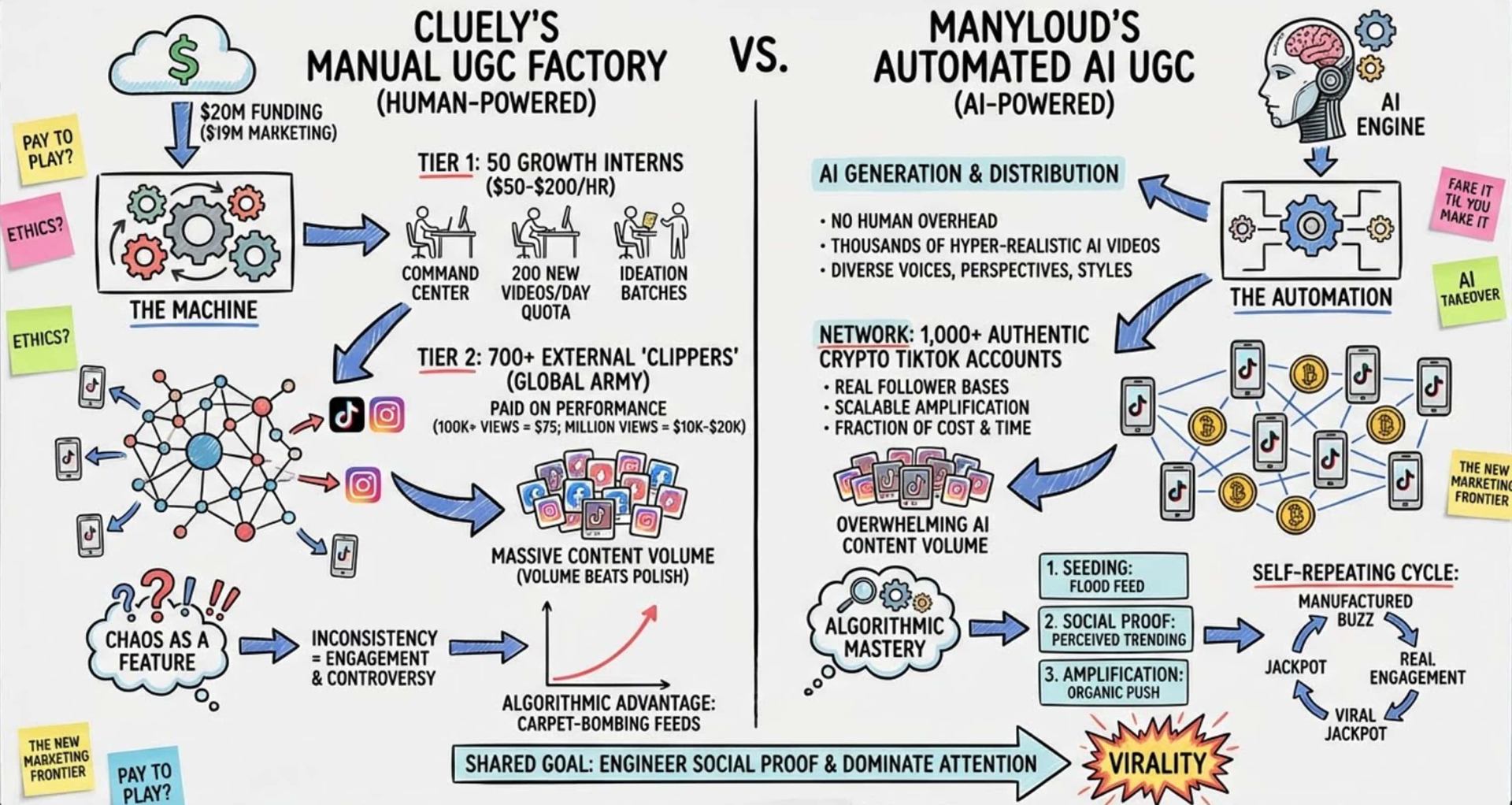
Cluely did not just go viral. It built virality on purpose: a data-driven operation that treats content creation as an assembly line rather than an art project. This strategy, while incredibly effective, relies on immense capital and human resources, showcasing a new frontier in growth marketing where the biggest risk isn't failure, it's being ignored. By examining the mechanics of Cluely's content machine, we can understand the power of mass-scale UGC and see how far volume alone can carry a brand in the war for attention.
Inside the factory: how the volume got made
At its core, Cluely's strategy is built on a simple, powerful premise: volume beats polish. In an algorithmic world, the more you post, the higher your chances of hitting a viral jackpot. To execute this, Cluely constructed a two-tiered human network that operates with the efficiency of a factory assembly line, churning out an unprecedented volume of content daily.
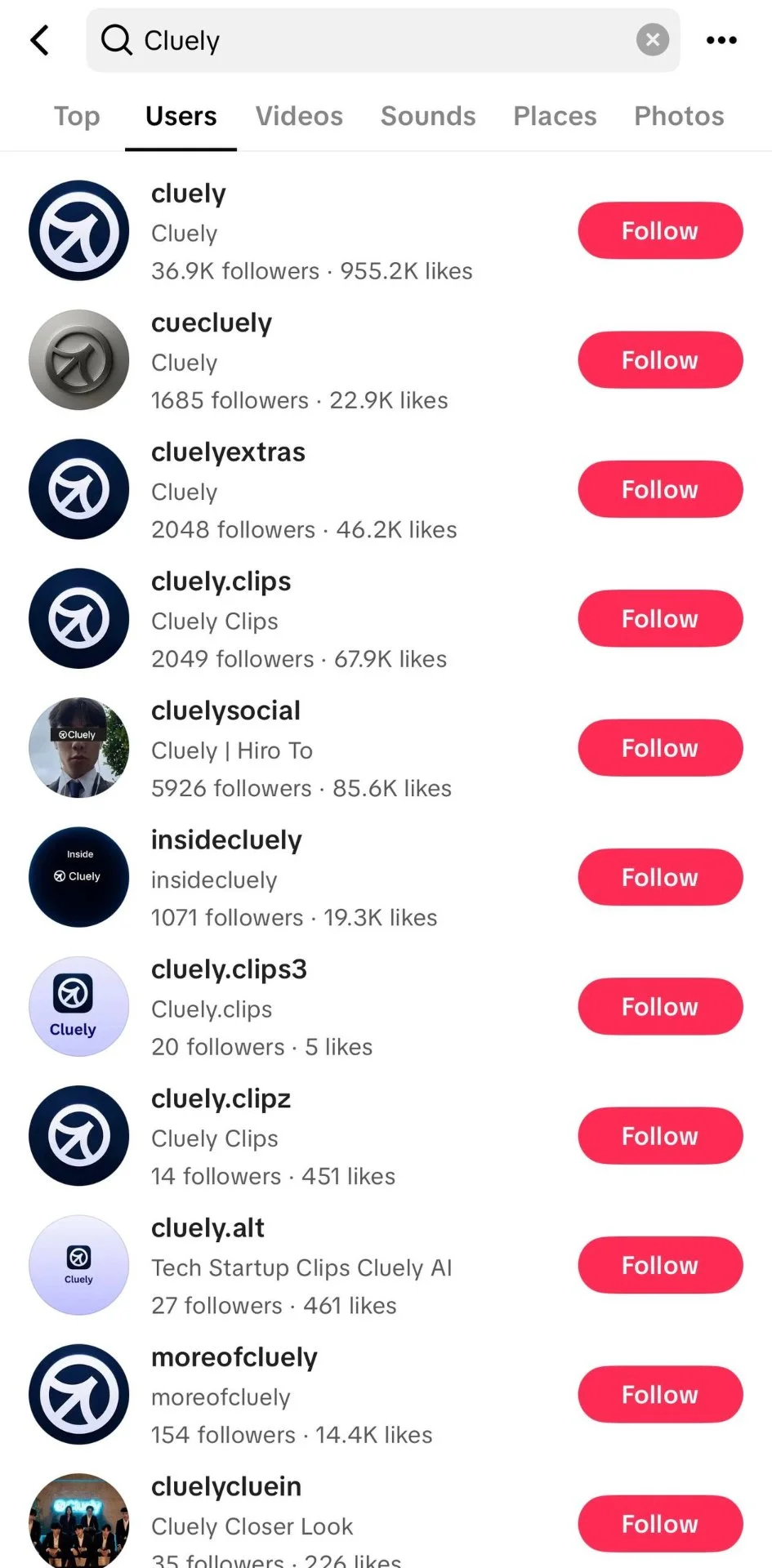
First, the company assembled a vast, distributed army of over 700 external content creators, or "clippers". The recruitment process was pure guerrilla work. Cluely's team would scour platforms like TikTok and Instagram, sending direct messages to small and mid-sized creators, often teenagers in countries with lower labor costs who were hungry for opportunities.
Managing this sprawling network was an elite internal team of 50 highly-compensated "growth interns". In a move that raised eyebrows across the industry, Cluely paid its non-technical interns an astonishing $50 per hour, while engineering interns commanded rates of $200 per hour. This highly paid internal team served as the command center for the entire operation. Their sole job was to create and manage the firehose of content. The company mandated a strict production quota: each of the 50 interns was required to create a minimum of four videos per day, resulting in an internal benchmark of 200 new, original videos flooding social media every single day.

This relentless output was guided by a highly systematized creative process. A dedicated "idea guy" was tasked with generating batches of 100 video concepts at a time. Creators were then given a simple, one-page content brief and the creative freedom to remix these core ideas in their own style. To ensure continuous improvement, each creator was assigned a content coach, and weekly meetings were held to review performance data and optimize the strategy. This combination of centralized ideation and decentralized execution allowed Cluely to maintain brand consistency while producing a diverse range of content at a scale previously unimaginable.
The Economics of Attention: Fueling the Fire with Millions
An operation of this magnitude doesn't come cheap. Cluely's factory-scale UGC strategy was powered by a formidable financial engine, fueled by its significant venture capital funding. Co-founder Roy Lee made the company's priorities crystal clear when he stated in an interview that of the $20 million raised, "Probably $19 million" would be dedicated to marketing.
The numbers are blunt. Beyond the highly paid internal team, Cluely's external clippers are compensated based on performance. Creators typically earn $75 per video that surpasses 100,000 views. For top performers, the rewards are even higher, creators who consistently deliver million-view videos can earn $10,000 to $20,000 per video. This generous compensation model transformed content creation from a side hustle into a lucrative career for those who managed to crack the code.
The strategy was simple: out-produce everyone. By creating exponentially more content than competitors, Cluely guaranteed that it would have statistically more chances to go viral. In essence, the company bet on the law of large numbers. This calculated risk, backed by significant capital, allowed Cluely to blanket social media, ensuring that the brand was unavoidable, constantly in the feed, and top of mind for users.
The "Shock and Awe" Strategy: Chaos as a Feature, Not a Bug
A common objection to mass-scale content is the fear of inconsistency. Critics argue that when you have 700 creators making content, there's no way to control the narrative or maintain brand standards. Cluely, however, viewed this concern differently. The company did not just accept inconsistency. It made inconsistency part of the plan.
By allowing thousands of wildly different content pieces to flood the feed, Cluely generated controversy, discussion, and most importantly, engagement. The sheer variety of voices ensured that there was always something that would resonate with different audiences. Some videos would be slick and professional, while others would be raw and controversial. This "chaos strategy" meant that Cluely's brand narrative was fluid, multifaceted, and constantly evolving.
This approach also provided a critical algorithmic advantage. Social media platforms prioritize accounts and creators that post frequently and engage users. By having hundreds of accounts pushing content simultaneously, Cluely maximized its presence in algorithmic recommendation feeds, ensuring that the brand was seen by millions, regardless of whether viewers followed the company directly.
What Cluely proves, and what it cost
Cluely's model worked, and it had one enormous weakness: it ran on people. Recruiting 700 creators, briefing them, coaching them, checking their output and paying them per view, plus a 50-person internal team to coordinate it all, is expensive, slow to build and painful to keep running. The playbook is proven. The overhead is the price.
That is the actual lesson of the case: volume wins, and volume built out of human labor takes a $20 million raise.
The same machine, without the humans
This is the question we built Manyloud around: what does Cluely's machine look like when the creators do not have to be recruited, because they are made?
Each creator is built end to end: face, voice, character, and the channel it posts from. We write the scripts, the client approves every word, and the videos post through our own network of TikTok channels. The three-step loop is the same one Cluely ran, minus the human supply chain:
- Make. Hundreds of genuinely different videos, no two sharing a face or an opening.
- Post. Across our own network of channels, at whatever volume the campaign calls for.
- Tune. Watch which angles pull views, cut the flops, put more weight behind the winners while the campaign runs.
The result Cluely bought with 750 people and a $19 million marketing budget becomes a package with a price on it. We have run this model since 2022, with 500M+ views delivered, for products well beyond one app.
Why the volume works on the algorithm
The mechanics are not mysterious. Platforms reward exactly what a high-volume, many-voices campaign produces: frequent posting, genuinely varied content, and engagement arriving from many directions at once.
When dozens of accounts hit the same product inside a day, the platform draws the same conclusion a person would and starts showing it to more people. Real viewers join in, comment and make their own videos, and their activity pushes the content further still. The campaign starts the conversation, and the audience carries it from there.
Cluely proved the strategy in public, with venture money and an army. The interesting part is that the army is now optional. If you want the arithmetic of doing this at package prices, the cost guide walks through every number.
The pricing is public, the first campaign starts at $15,000, and scripts take hours.

